

What has happened, why it matters and what happens next.
The government’s long-promised review into child grooming networks has been thrown into renewed turmoil after the resignation of its final chair, prompting fresh questions about the credibility and future of one of the UK’s most sensitive public inquiries.
The inquiry was originally commissioned by the Home Office in 2023 to investigate how public agencies across England handled cases of organised child sexual exploitation (CSE). It followed a series of high-profile grooming scandals in towns such as Rotherham, Rochdale, Oxford, Telford and Newcastle, where hundreds of victims – mostly girls – were subjected to prolonged abuse while agencies failed to intervene.
A troubled start
From the outset, the inquiry faced controversy. Ministers had promised survivors that the review would be wide-ranging, independent and survivor-led, learning lessons from the failures exposed by the Independent Inquiry into Child Sexual Abuse (IICSA).
However, in the two years since its creation, progress has been slow and increasingly fraught. A number of panel members, survivor advocates and professional advisers have resigned, citing concerns about the inquiry’s independence, transparency and purpose.
This month, the situation escalated further when the final remaining chair announced their resignation. In a statement, they said the process had become “politically compromised” and that there was “a lack of trust between survivors, officials and ministers”. The former chair warned that without genuine independence, the inquiry risked “failing those it was created to serve”.
Political reaction
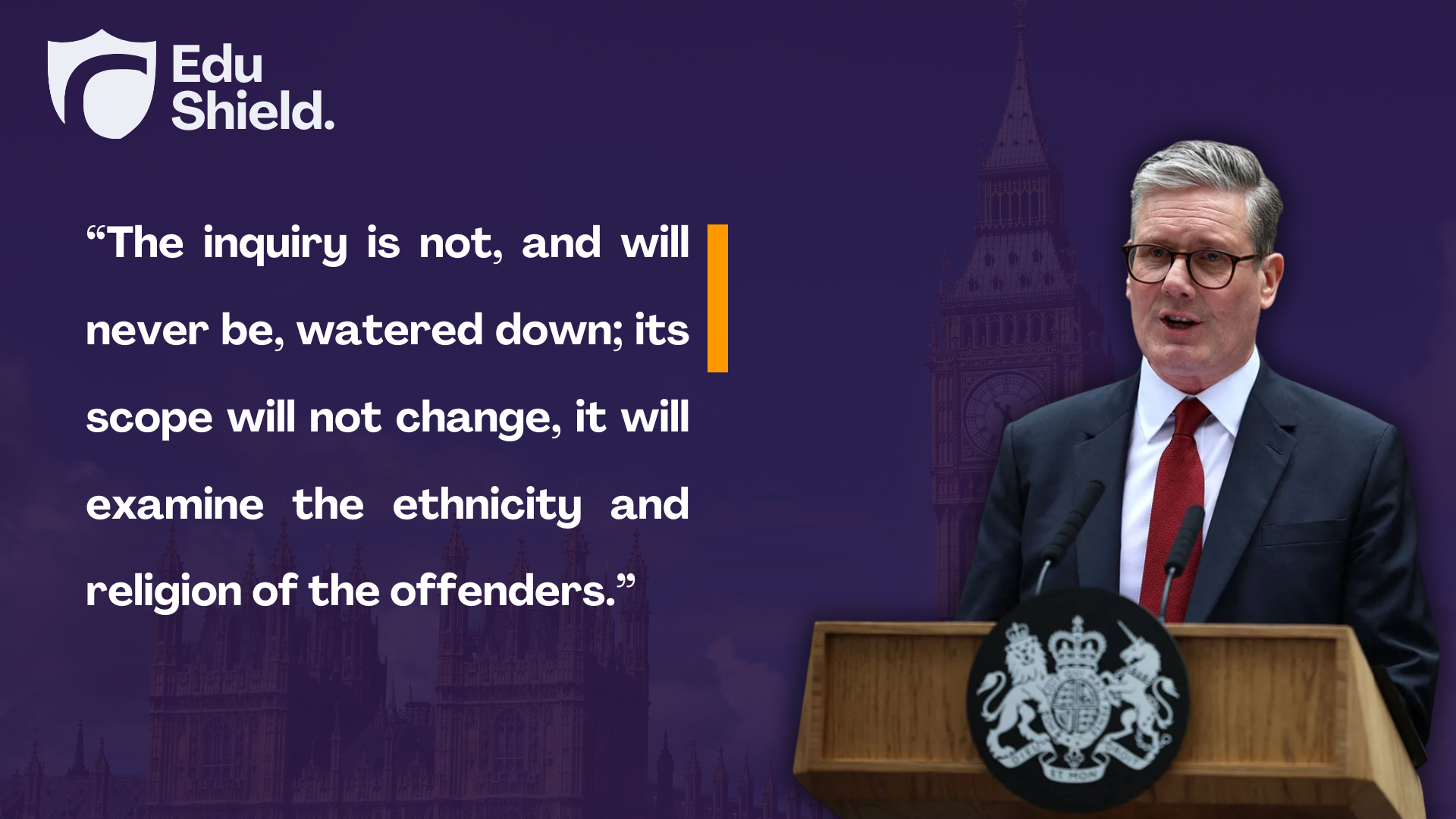
The resignation triggered an immediate political response. Prime Minister Keir Starmer moved quickly to insist that the inquiry would continue as planned, telling Parliament:
“The inquiry is not, and will never be, watered down. Its scope will not change. It will examine the ethnicity and religion of the offenders.”
The Prime Minister added that while political rows should not derail the investigation, it was vital to preserve confidence among survivors and the public. The government has pledged to appoint a new chair “as soon as possible” and said the inquiry would still report its findings in due course.
Downing Street later confirmed that the Home Office remains responsible for the inquiry’s administration and that no decision has been made to alter its structure or remit.
Survivor response
Survivors’ groups, however, have reacted with anger and dismay. Many described the latest resignation as “a betrayal” of the commitments made to victims and their families. Some have called for a complete restart of the process, led by an independent statutory body rather than government departments.
One survivor group spokesperson told the BBC:
“We were promised that this inquiry would finally tell the truth about how institutions failed children. Instead, we have another political tug of war. The government must rebuild trust from scratch.”
Campaigners have also raised concerns that the delay could allow key evidence and institutional memory to fade, particularly as some of the historic cases under review date back more than 20 years.
Scope of the inquiry
The inquiry’s remit was to investigate how public authorities – including police forces, local authorities, schools, children’s services and health bodies – identified, responded to and prevented child grooming by organised groups. It was also tasked with exploring whether cultural sensitivities or fear of being accused of racism contributed to inaction in some areas.
The inquiry was expected to publish interim recommendations in late 2025, focusing on national data sharing, professional accountability and support for victims. A full report was due in 2026. Both timelines are now in doubt.
Officials have confirmed that evidence already gathered will be preserved, and that work will continue while a new chair is appointed.
Wider implications
While the latest setback has understandably focused attention on political leadership, many professionals working in safeguarding, policing and social care remain concerned about the potential loss of momentum. National inquiries are often critical in identifying systemic failings and shaping future policy, particularly in complex areas such as grooming and exploitation.
The IICSA report, which concluded in 2022, led to significant legislative and policy reforms. Experts warn that if the current inquiry collapses, there could be a long gap before another national review is launched, leaving lessons unlearned and confidence among survivors further damaged.
Professor Alexis Jay, who chaired the IICSA, previously commented that the public expects inquiries of this nature to be “independent, credible and survivor-focused”. She added that “when confidence in those principles breaks down, the ability to deliver justice breaks down with it.”
What happens next
The Home Office has said that work to identify a replacement chair is already underway. Ministers are expected to outline next steps in the coming weeks, including whether the inquiry will retain its current structure or be converted into a statutory process with greater independence and legal powers.
For now, the inquiry’s staff continue to collate evidence already submitted, and survivors are being reassured that their testimony remains secure.
Whether the inquiry can regain trust and deliver meaningful change remains to be seen. For the thousands of victims and families still waiting for answers, the hope is that this will not be another lost opportunity in the long struggle to expose and end organised child sexual exploitation in the UK.