

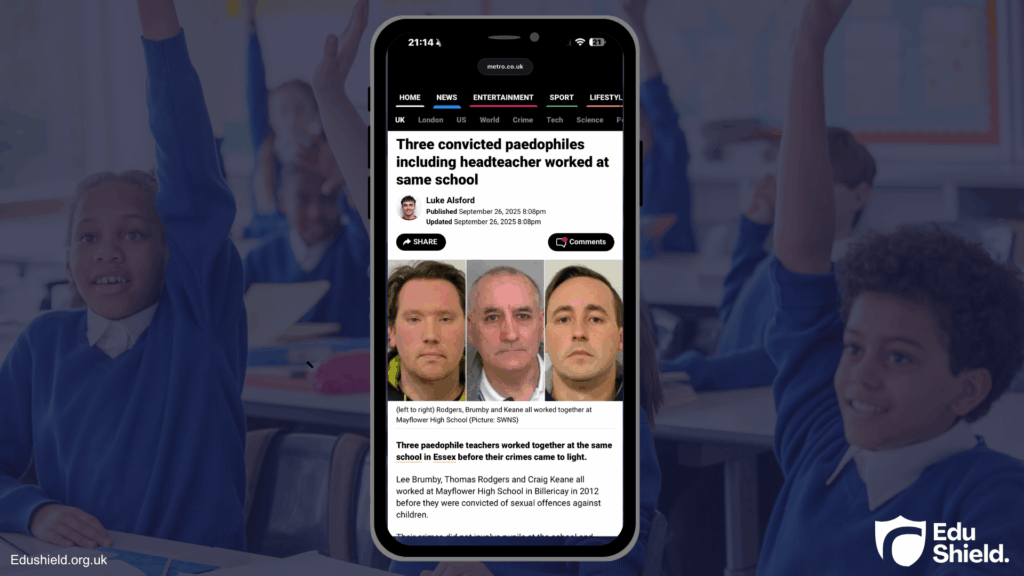
The news that three individuals convicted of child sexual offences, including a former headteacher, once worked at the same school has rightly caused widespread concern. The case raises serious questions about safeguarding, recruitment practices, the handling of historic allegations, and the role of institutions in protecting children.
According to media reports, one of the individuals is former headteacher Lee Brumby, aged 63, who is facing trial at Basildon Crown Court in connection with non-recent sexual offences involving children. The charges he faces include rape of a child, engaging in sexual activity in the presence of a child, and indecency with a child. He has denied the allegations and his trial, originally scheduled for this year, has been postponed due to procedural issues, with a new date now set for July 2025. It is understood that his alleged offences predate his employment at the school in Essex. Alongside him, two other former staff members with convictions for sexual offences against children have also been linked to the school, though details of their cases are less widely reported.
What is particularly troubling about this story is the concentration of offenders within one institution. Whether these individuals were convicted before or after their employment, the fact that they were able to work in a school environment demands scrutiny. It underlines the importance of robust vetting procedures, but also the limitations of background checks when offences are historic, undetected, or when allegations have not yet led to charges.
There are broader safeguarding implications. Schools are required to maintain rigorous child protection standards: designated safeguarding leads, training for all staff, safer recruitment practices, and clear reporting mechanisms. Governing bodies and local authorities have a statutory duty to ensure that safeguarding is effective and not treated as a box-ticking exercise. Yet high-profile cases continue to show how determined offenders can exploit positions of trust, and how institutional cultures can sometimes discourage whistleblowing or minimise concerns in the interest of preserving reputation.
This case also highlights the complexity of prosecuting historic sexual offences. Evidence may be harder to gather, witnesses may be reluctant or traumatised, and cases can take years to come to court. Survivors of abuse often carry the burden in silence, and only later in life feel able to speak out. That reality places additional responsibility on schools, employers, and regulatory bodies to ensure that safeguarding measures are preventative, not simply reactive.
The key lessons are clear. Safeguarding must be embedded in every aspect of school life. Recruitment processes must include not just statutory checks but a culture of professional curiosity, reference-taking, and due diligence. Staff must feel confident to raise concerns without fear of reprisal, and pupils must know that they will be listened to. Local authorities and inspection bodies must ensure that safeguarding standards are not superficial but genuinely tested in practice. Most importantly, when allegations arise, institutions must prioritise the welfare of children above reputational considerations.
The revelation that multiple convicted offenders worked at the same school is a powerful reminder that safeguarding is never finished. Policies and procedures are only effective if backed by vigilance, transparency, and a culture that puts children’s safety first. Schools cannot afford complacency, and society cannot afford to look away.
References
Metro. Three convicted offenders, including a headteacher, worked at the same school. Published 26 September 2025. Available at: https://metro.co.uk/2025/09/26/three-convicted-paedophiles-including-headteacher-worked-school-24273133/ Yahoo News. Three convicted offenders linked to South Essex school. Available at: https://uk.news.yahoo.com/three-paedophile-former-south-essex-083000848.html BBC News. Ex-headteacher and wife deny sexual offences. Published 2022, updated 2025. Available at: https://feeds.bbci.co.uk/news/articles/cx2l1rx0yrxo